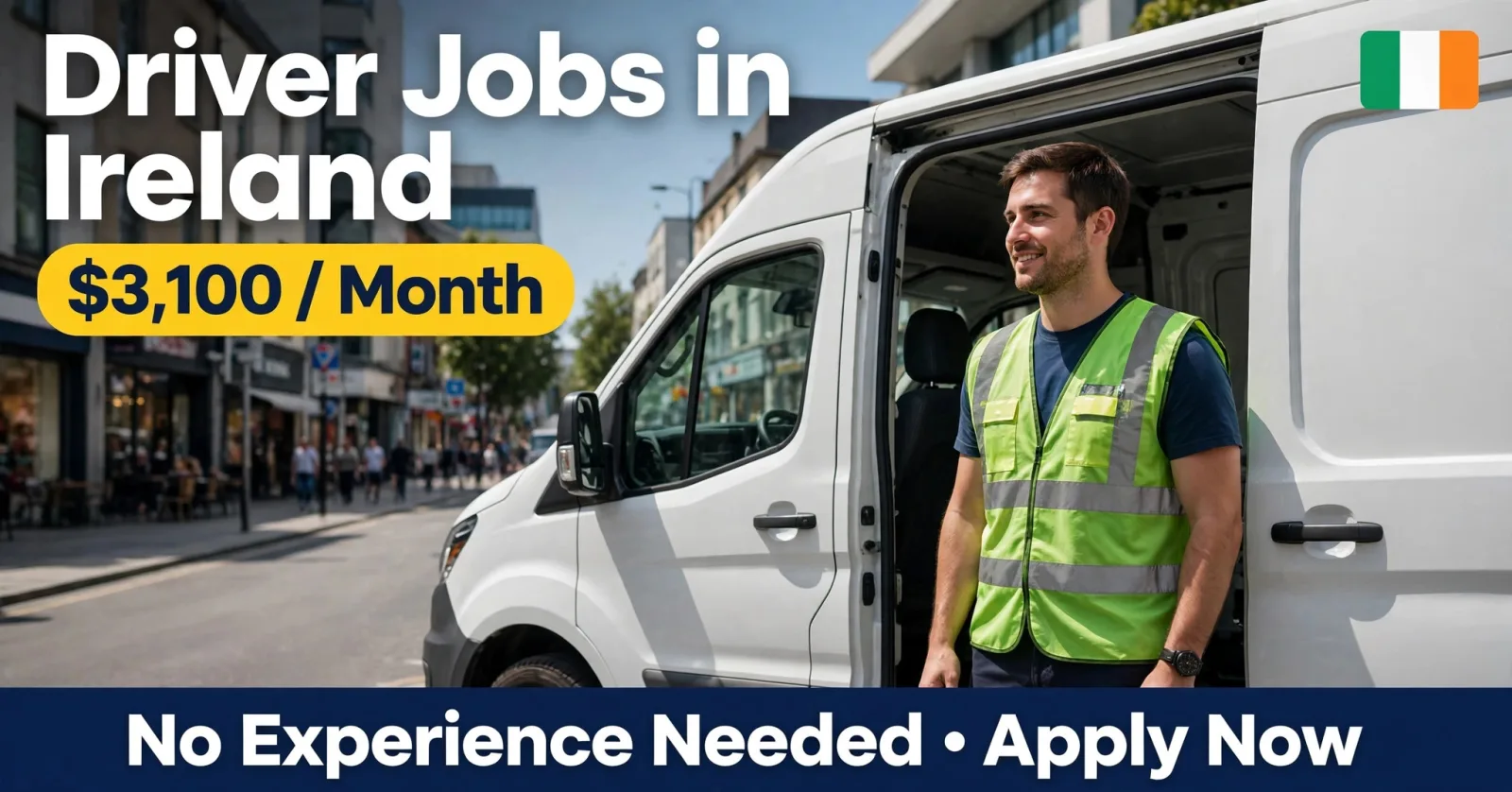
Driver jobs in Ireland are a practical way to start working if you already have a driving licence, and many employers provide training for their own vehicles and routes. Your main work is simple and responsible: drive safely, deliver goods or passengers on time, and keep accurate records. Most employers provide a van or truck, fuel and a phone, and pay for training on their systems.
You will usually work for a delivery company, a supermarket, a logistics firm, a bus company or a taxi firm. Some drivers deliver parcels in a city, others drive a truck between warehouses, and others drive a bus on a fixed route. In job ads this work is also called delivery driver, van driver, HGV driver, bus driver or courier, so read the duties carefully — the licence, hours and pay can be very different.
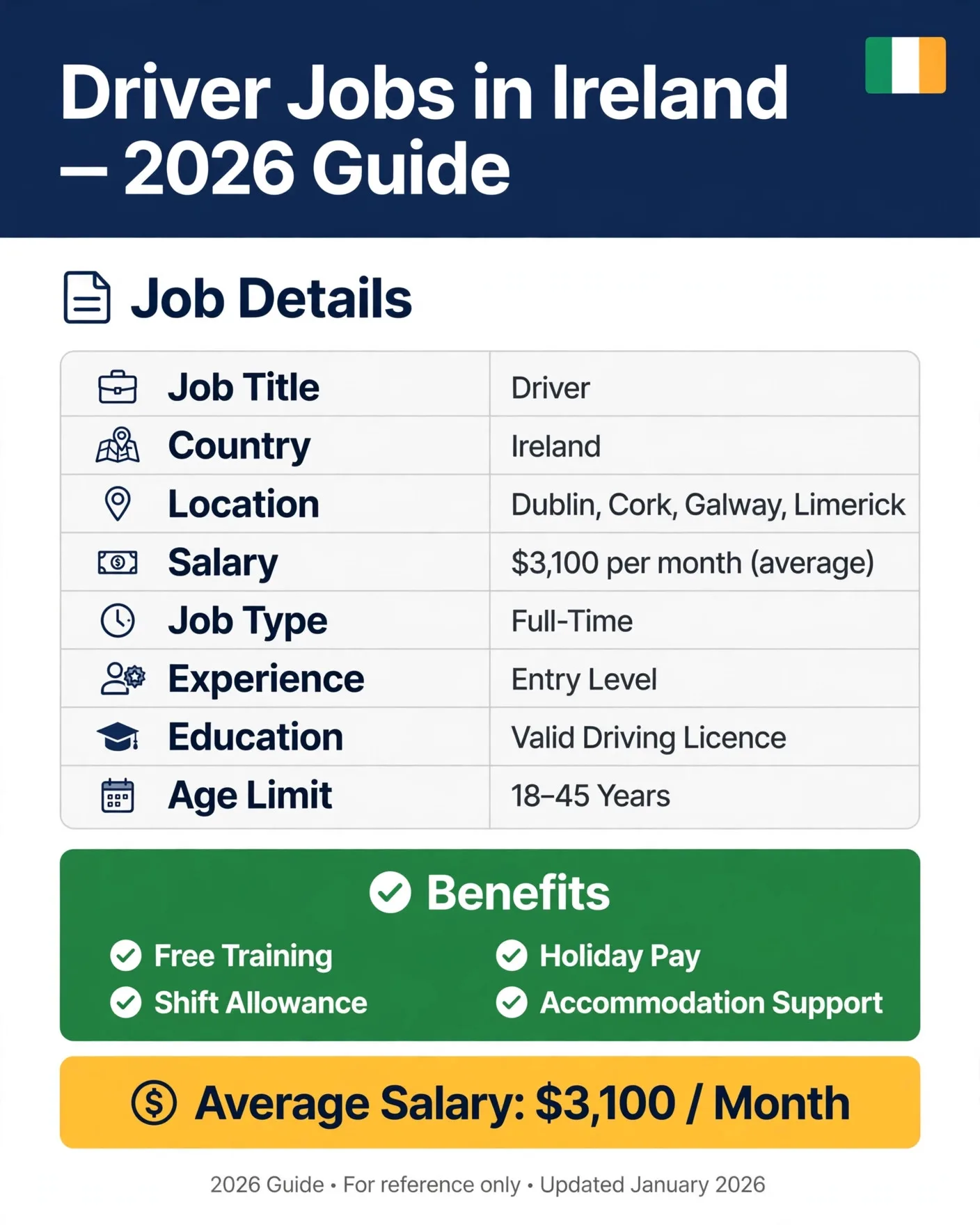
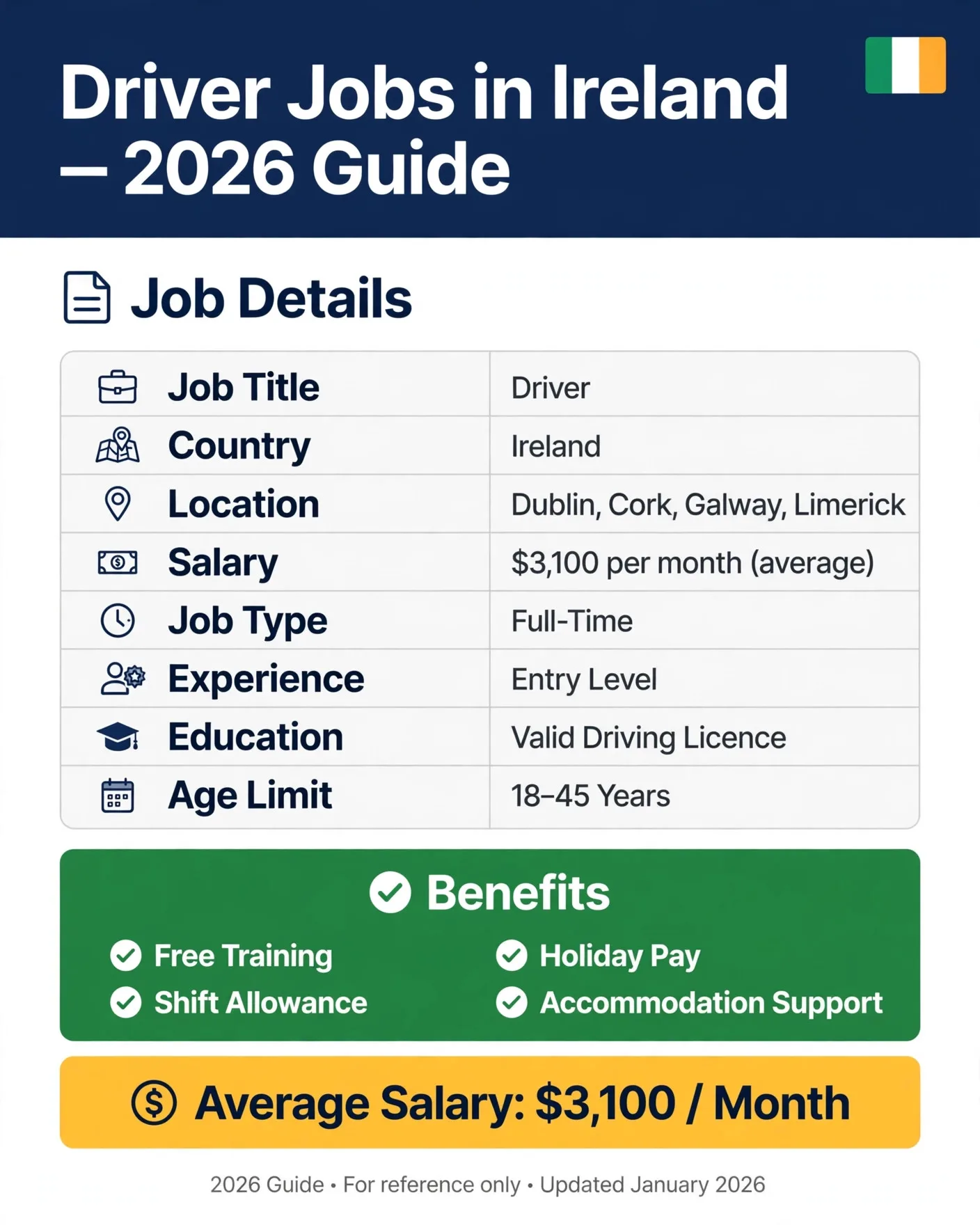
Driver roles in Ireland pay about $3,100 per month on average (about €2,852), with a typical range of $2,400–$4,200 per month depending on the licence, vehicle and route. A Delivery Driver averages around $2,900 per month, while an HGV Driver averages around $3,800 per month. The national minimum wage from 1 January 2026 is €13.50 per hour, and a full-time worker is entitled to 20 days of annual leave. A full Irish or EU driving licence is required for most roles, and a CPC qualification is required for professional HGV and bus drivers.
Job Overview
| Job Title | Delivery Driver / Van Driver |
| Country | Ireland |
| City | Dublin, Cork, Galway, Limerick, Belfast |
| Salary | $2,400–$4,200 per month (average $3,100/mo, about €2,666) |
| Job Type | Full-Time |
| Experience | Driving experience preferred — training provided |
| Education | No Diploma Required |
| Age Limit | 18–50 Years (21+ for HGV and bus roles in most cases) |
| Application Deadline | 31 December 2026 |
| Work Hours | 39–48 hours per week, day / evening / weekend shifts |
| Accommodation | Provided by some employers / agencies (check before you travel) |
| Work Permit | Required for non-EU/EEA applicants; EU/EEA citizens do not need a permit |
Note: Salary figures are averages from job listings. Always confirm the exact salary, hours and benefits in the written job offer before you travel or sign a contract.
What Does a Driver Do?
A driver moves goods or people safely and on time. Your daily tasks depend on the job — a delivery driver loads parcels, follows a route on a phone or sat-nav, delivers to homes and shops, and collects signatures; an HGV driver drives a large truck between depots, checks the load and completes delivery paperwork; a bus driver follows a timetable, picks up passengers and helps them board safely.
Some driver jobs are the same route every day, others change with orders and traffic. Ask the employer about this before you start, because a job ad does not always show what the work really feels like. You will often drive for many hours, lift parcels and work in all weather, so good concentration and physical fitness help. Safe driving, punctuality and polite customer service matter most.
Where to Find Driver Jobs in Ireland?
Driver work is available across Ireland, but there are more jobs in cities with warehouses, shops and transport hubs. Dublin has the most delivery, HGV and bus driver work. Cork has port, food and retail delivery work. Galway and Limerick have retail, food and logistics driving. Belfast has delivery, HGV and bus driver work.
Do not only look in big cities. Supermarkets, farms and factories in smaller towns also need drivers. Check the travel time for early starts — a bus at 9:00 does not help if your shift starts at 6:00. Search with different terms: Delivery Driver, Van Driver, HGV Driver, Truck Driver, Bus Driver, Courier, Multi-Drop Driver.
What Does a Workday Look Like?
That depends on the employer. A delivery driver may start at a depot, load a van, deliver 80–120 parcels in a day and return with collections. An HGV driver may drive between Dublin and Cork, unload at a warehouse and complete a tachograph record. A bus driver may drive the same route several times a day, help passengers and report any problems.
There are driver jobs with fixed daytime hours, and jobs in the early morning, evening and weekend. With shift work you may start early one week and later the next week. Ask how the roster is made, how many hours you will get each week, and whether the vehicle, fuel and phone are provided.
How Much Do Drivers Earn in Ireland?
Salary varies by licence, vehicle, experience and route. In job ads the salary is usually shown per hour or per month, gross — tax and other deductions come off, so the net amount in your bank account is lower. Compare not only the hourly wage but also the number of hours, overtime and any allowances. HGV and bus drivers normally earn more than van and delivery drivers, because they need a higher licence and CPC.
For overtime, weekend work and night work you sometimes get a higher rate. It is not the same for every job, and it depends on your agreement and employer. As an employee you also build up paid annual leave — 20 days for a full-time worker — and public holidays. A company vehicle, fuel card and phone are often provided, so ask what is included before you accept the offer.
Job Responsibilities
- Drive safely and follow Irish road rules and speed limits
- Deliver parcels, goods or passengers on time and in good condition
- Load and unload the vehicle and check goods against delivery notes
- Use a phone, sat-nav and tachograph correctly and keep records
- Carry out daily vehicle checks and report faults
- Collect payments or signatures when required
- Help customers politely and report delays or problems to the dispatcher
Requirements
- Age 18 years or older (21+ for HGV and bus roles in most cases)
- A full driving licence — category B for vans, C/CE for HGV, D for buses
- CPC qualification for professional HGV and bus drivers in Ireland
- Driving experience preferred; training is provided on routes and systems
- Able to lift parcels, drive for long periods and work in all weather
- Careful, reliable and able to follow routes, timetables and instructions
- Valid passport and the right to work in Ireland (or a work permit arranged by the employer)
- A clean driving record is required by most employers
Benefits
- Monthly salary of about $3,100 on average, depending on licence and route
- Company vehicle, fuel card and phone provided by many employers
- 20 days paid annual leave plus public holidays
- Overtime, weekend and night allowances in many roles
- Training and CPC support from many larger employers
- Pension contributions from many larger employers
- A clear path to HGV, Supervisor and Transport Manager roles
How to Apply for Driver Jobs in Ireland?
- Prepare a short CV — your licence categories, CPC, driving experience, and when you are available.
- Write 2–3 simple sentences, for example: "I am looking for delivery driver work near Dublin. I have a full category B licence and can start soon. I would like to know more about the route and working hours."
- Apply only through the employer's official website, a known job site such as JobsIreland, or a registered recruitment agency.
- Ask in the interview what vehicle you will drive, whether fuel and a phone are provided, and how many deliveries are expected each day.
- Before your first day, check the depot address, start time, vehicle check procedure and the name of your contact person.
Warning: Never pay money to an agent just to get a job. A real employer does not charge a fee for recruitment. Do not send copies of your ID or licence through an unknown chat account. If anyone asks for a fee for a visa, a licence, a job offer or accommodation, stop and check with Citizens Information first.