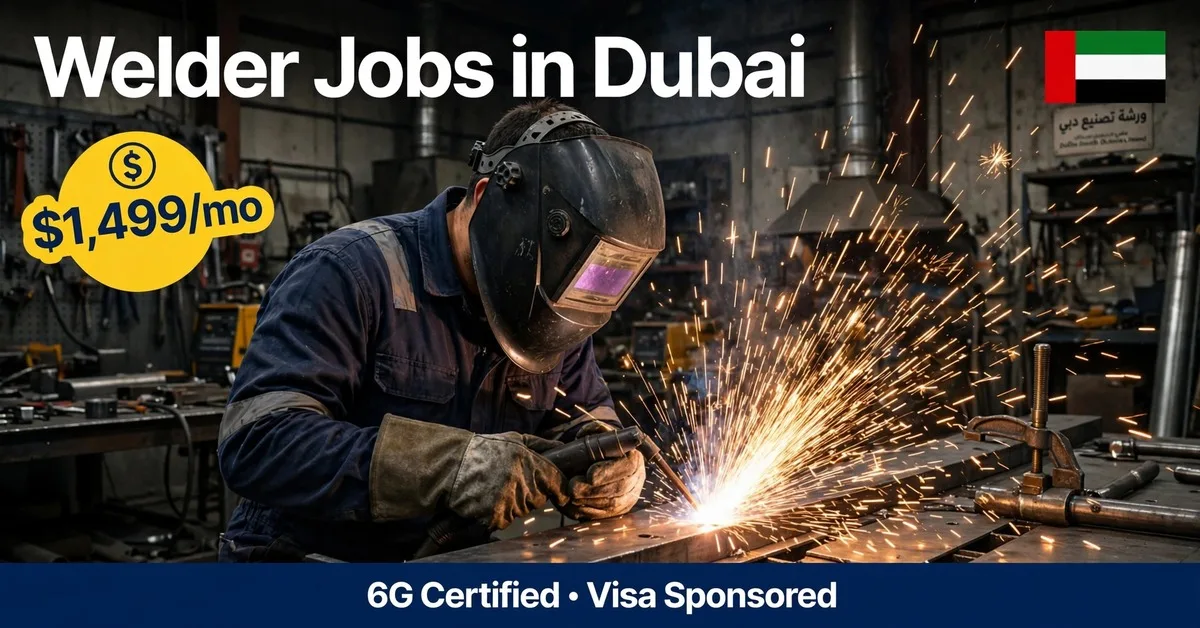
Welder jobs in Dubai are steady, skilled trade roles in construction, ship repair, oil and gas, and fabrication workshops. Your main work is joining metal parts with heat — cutting, fitting and welding steel, pipes and structures to exact drawings. Most employers provide a trade test on arrival, so your skill matters more than a diploma.
You will usually work in a fabrication yard, a construction site, a shipyard or an industrial workshop. Dubai's building boom, ship repair yards in Jebel Ali and industrial zones in Sharjah and Abu Dhabi keep welders in demand all year. TIG and 6G pipe welders earn the highest pay, because coded welding is needed for pressure pipes and oil and gas work.
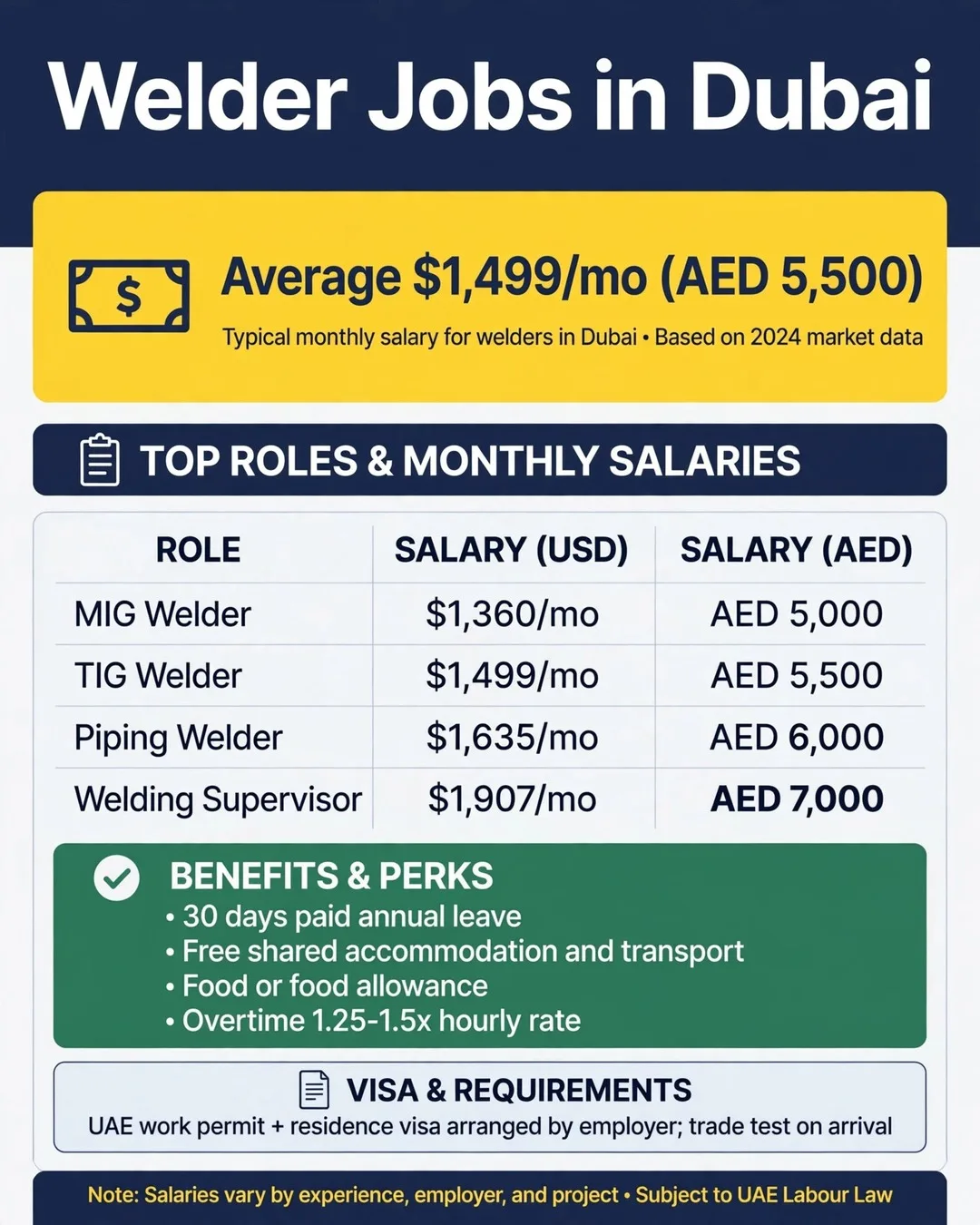
The average salary for welder jobs in Dubai is around $1,499 per month (about AED 5,500). The exact pay depends on your welding process, certificates and experience — a certified 6G pipe welder can earn double a general welder. There is no income tax on salary in the UAE and most employers provide free accommodation, transport and food or a food allowance. Always confirm the exact salary, hours and benefits in the written job offer before you travel or sign a contract.
Job Overview
| Job Title | Welder / Welding Technician |
| Country | United Arab Emirates (UAE) |
| Cities | Dubai, Abu Dhabi, Sharjah, Ajman, Ras Al Khaimah |
| Salary | $1,499 per month (average) / approx. AED 5,500 per month |
| Minimum Wage | No federal minimum wage in the UAE |
| Job Type | Full-Time |
| Experience | 1–3 Years (trade test required) |
| Education | ITI / Trade Certificate preferred |
| Age Limit | 18–45 Years |
| Application Deadline | 31 December 2026 |
| Work Hours | 48 hours per week, day / night shifts |
| Holiday Pay | 30 days paid annual leave per year |
| Accommodation | Free shared accommodation + transport from most employers |
| Work Permit | UAE work permit + residence visa arranged by the employer |
Note: Salary figures are estimates from current job listings. Always confirm the exact salary, hours and benefits in the written job offer before you travel or sign a contract.
What Does a Welder Do in Dubai?
A welder joins metal parts using arc, MIG/MAG, TIG or gas welding. Your daily tasks depend on the job — in a fabrication shop you read drawings, cut and fit steel plates and weld frames, tanks and structures; on a construction site you weld structural steel, rebar and supports; in a shipyard you repair hulls and decks; in oil and gas you weld pipes to coded standards. You also grind, clean and inspect your welds, and report defects to the supervisor.
Welding is precise physical work. You must hold a steady hand, read technical drawings and follow safety rules at all times — helmet, gloves, apron and boots are mandatory. Quality is checked by inspectors, and a failed weld test can end a contract, so practice before your trade test.
Where to Find Welder Jobs in Dubai?
Most welding jobs are around Dubai (Jebel Ali industrial area, Al Quoz workshops, shipyards), Abu Dhabi (oil, gas and industrial projects) and Sharjah (fabrication and industrial zones). Large employers include shipyards, steel fabricators, construction contractors and oil and gas maintenance companies.
Search the careers pages of large contractors and fabrication companies, and use different search terms: Welder, Arc Welder, MIG Welder, TIG Welder, Pipe Welder, 6G Welder, Structural Welder, and Fabricator. Recruitment agencies in India, Pakistan, the Philippines and Bangladesh run regular trade tests for Gulf welding jobs.
What Does a Workday Look Like?
A welder's day usually starts at 7:00 or 8:00 in the morning with a safety briefing, then you go to your work station or site area. You weld, grind and fit for most of the shift, with a lunch break and short rest breaks. In summer, outdoor site work follows heat rules, with midday breaks on the hottest days.
There are day shifts and night shifts, and weekend work is common on projects with deadlines. The standard work week is 48 hours, and overtime is paid at 1.25 to 1.5 times the hourly rate. Ask how overtime is calculated and whether the employer provides transport for night shifts.
How Much Do Welders Earn in Dubai?
Salary varies by welding process and certification. General and arc welders earn around AED 2,500–3,500 per month, MIG/MAG welders AED 3,000–4,500, TIG welders AED 4,000–6,000, and certified 6G pipe welders AED 6,000–9,000. The average across all welding roles is around AED 5,500 per month. Compare not only the wage but also accommodation, transport and food, as these add a lot of real value — a free room and meals can be worth AED 1,500 or more per month.
The figures in this guide are estimates from current listings, not offers. A welding certificate and a clean trade test are the two things that raise your pay the most. Coded welders with oil and gas approvals earn the highest rates.
Job Responsibilities
- Weld metal parts using arc, MIG/MAG, TIG or gas welding as required
- Read and follow technical drawings, welding symbols and work orders
- Cut, grind and fit metal parts before welding
- Inspect finished welds and repair defects
- Follow safety rules and wear protective equipment at all times
- Keep the work area clean and report damaged tools or equipment
- Work with fitters, supervisors and inspectors to finish jobs on time
Requirements
- ITI or trade certificate in welding (preferred, not always required)
- 1–3 years of welding experience, with a trade test on arrival
- Welding certificates (6G, TIG or coded) raise pay and job chances
- Able to read basic technical drawings
- Physically fit for hot, outdoor and workshop work
- Valid passport and a clean medical fitness result for the UAE visa
Benefits
- Monthly salary of around $1,499 (average, about AED 5,500) — tax-free
- 30 days paid annual leave per year plus public holidays
- Free shared accommodation and transport from most employers
- Food or food allowance from many employers
- Overtime at 1.25 to 1.5 times the hourly rate
- End-of-service benefits under UAE labour law
How to Apply for Welder Jobs in Dubai?
- Prepare a short CV — your welding processes, certificates and years of experience.
- Practise your trade test — most employers test arc, MIG or TIG welding before hiring.
- Apply only through the employer's official website, a known job site, or a registered recruitment agency.
- Ask in the interview about the trade test, the shift pattern, accommodation and overtime rates.
- Before your first day, check the workshop or site address, your start time and the name of your contact person.
Warning: Never pay money to an agent just to get a job. A real employer does not charge a fee for recruitment. Do not send copies of your ID or passport through an unknown chat account. If someone asks for payment for a visa, a trade test or a job offer before you start work, stop and check the offer with the official sources below.